
Birdwatching in Tulum: discovering the hidden biodiversity of the Riviera Maya
Tulum is often imagined as a place of sea and sunlight, and it certainly is, yet there’s more surprising beauty just beyond the shoreline. Between tropical forest, freshwater lagoons, mangroves and protected wetlands, birdwatching in Tulum becomes a slow, immersive way to discover the Riviera Maya’s hidden biodiversity: authentic, photogenic and naturally aligned with the growing trend of eco-friendly vacations in Tulum.
It doesn’t matter if you are an experienced birder, a wildlife photography lover or simply a curious visitor: nature tours in Tulum can reveal an astonishing variety of species in a single morning. And because many Tulum eco tours include a guide, gentle pacing and easy access points, birdwatching here is also approachable for beginners.
Why birdwatching Tulum is so rewarding
What makes the birds of the Riviera Maya so compelling is the diversity of habitats packed into a relatively small area. In the same outing, you may move from semi-deciduous jungle to flooded forest, from mirror-still lagoons to open coastal skies. This stunning mosaic of ecosystems attracts residents, seasonal visitors and migratory birds, creating a destination where “wildlife Tulum” is not a slogan, but a daily presence.
Birdwatching also encourages a different rhythm of travel: the so-called calmcation. Instead of rushing between attractions, you learn to notice small movements, listen for calls and read the landscape with increased awareness. In a destination as visually intense as Tulum, that quieter focus can feel surprisingly luxurious.
Where to go: protected areas near Tulum for wildlife encounters
Sian Ka’an Biosphere Reserve: mangroves, wetlands and coastal skies
If you want one flagship setting for birdwatching in Tulum, it surely is the Sian Ka’an Biosphere Reserve. Recognized by UNESCO, Sian Ka’an is a vast protected landscape where coastal lagoons, mangroves and tropical forest create ideal conditions for wildlife observation. UNESCO reports over 330 bird species recorded within the property, making it one of the strongest birding contexts in the region.
In practical terms, this means high variety: wading birds in shallow wetlands, raptors and flycatchers along forest edges and seabirds riding the wind over the coast. The setting also reinforces the “eco” side of Tulum: birdwatching here is not just about sightings, but about experiencing a protected ecosystem with clear conservation value.
Muyil and Laguna Muyil: an easy, beginner-friendly introduction
For many travelers, Muyil / Laguna Muyil is the perfect entry point to nature tours in Tulum because it combines accessibility with a strong sense of place. Several guided outings include walking paths and boardwalk sections through wetlands and flooded jungle, which makes the landscape feel intimate and close-up rather than distant.
Depending on the tour format, Muyil experiences can blend birdwatching with cultural context (for example, Maya history and present-day community life), making the day feel way richer than a simple “checklist” of species.
Iconic birds to look for around Tulum
Rather than treating birds as a long, technical list, it helps to read them as “signatures” of each habitat. Let’s take a look at the main species you might be lucky enough to spot in Tulum and the Yucatán Peninsula as a whole.
Jungle and forest edges: color, movement and that “wow” moment
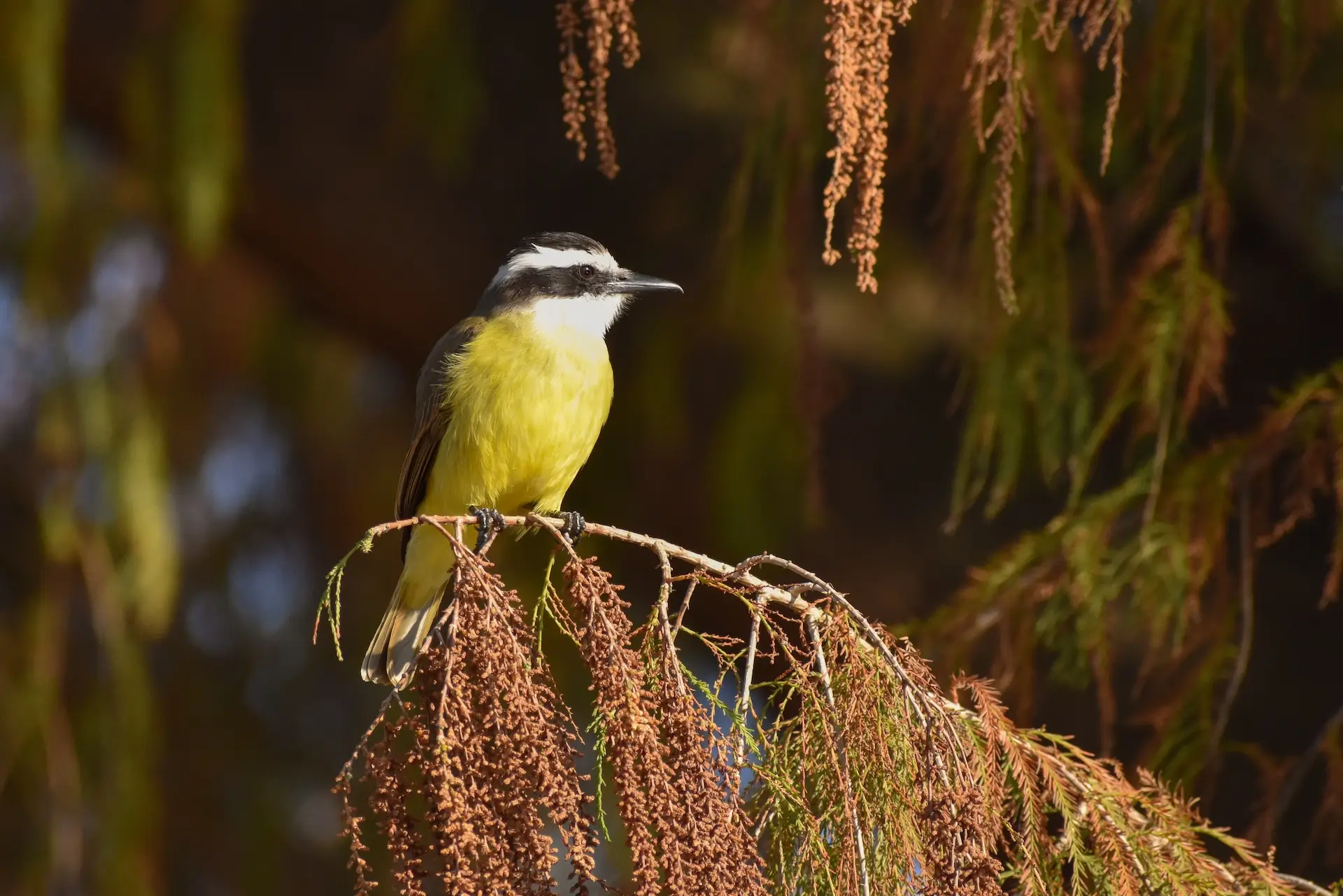
In tropical woodland, you may spot vivid species such as orioles and striking flycatchers. Guides often highlight birds like the Great Kiskadee and Couch’s Kingbird, both strongly associated with open woodland and forest margins: both are excellent for beginner-friendly sightings because they are active, visible and super-easy to identify.
If you are drawn to more iconic, photo-worthy encounters, the turquoise-browed motmot (often associated with cenotes and archaeological areas) is one of the region’s most distinctive birds, with an unmistakable tail shape and bright coloration.
Lagoons and wetlands: elegance in still water
Around lagoons and mangroves, the atmosphere changes: reflections, silence, slow movement, striking hues. These are areas where herons and egrets often take the lead: species such as the Green Heron and Snowy Egret are strongly tied to these watery environments.
In the right conditions, you may also encounter more dramatic waders such as the Roseate Spoonbill, a highly photogenic symbol of wetland biodiversity, especially evocative in Sian Ka’an’s protected landscapes.
Coast and open sky: pelicans, frigates and seabird energy
The Riviera Maya is also a coastal ecosystem, and that matters a lot for birdwatching. Even when you are focused inland, the sky often delivers: pelicans, frigatebirds and other coastal flyers will help you feel how seamlessly beach, seaside, lagoon and reserve connect into one continuous natural corridor.
When to go: follow seasonality, but without rigid promises
Bird activity in the Riviera Maya is present year-round, but the variety can shift with migration and local breeding cycles. Generally speaking, it should be noted that winter months (roughly November to March) are especially rewarding in Mexico because migratory species join resident birds, increasing overall diversity.
In any season, timing still matters. Early morning is usually the best window: quieter atmosphere, softer light for photography, cooler temperatures and more active birds before midday heat.
What should you expect on guided birdwatching tours in Tulum?
One reason Tulum eco tours work well for beginners is the structure. Many guided birdwatching outings are designed as half-day experiences, with a clear flow: pickup, a short briefing, walking sections at an easy pace and focused observation points.
A good guide can also completely change the experience. Instead of simply “hoping to see something,” you learn the proper way to look and what to look for: how to scan the canopy, how to spot movement in mangroves, how to listen for calls that reveal birds you would otherwise miss. Some tours are explicitly built around small-group wildlife observation, which makes the experience calmer, more personal and more aligned with a luxury-eco travel mood.
Get ready: here’s a simple birdwatching checklist for first-timers
You do not need to be an expert to enjoy wildlife Tulum experiences: just prepared enough to stay comfortable and respectful. Here’s a short list of best practices compiled by our knowledgeable team:
- Wear neutral colors: stick to sand, olive, khaki, grey or muted tones. Bright white and neon shades catch the light and stand out against the foliage, which can make wildlife more cautious and also distract other people in the group. Neutral clothing is also better for photos, as it keeps reflections down and helps you blend into the scene.
- Bring water and sun protection, ideally reef-safe products, when you will also be near coastal ecosystems: even short walks can feel intense in warm, humid weather, and hydration is the simplest way to stay comfortable and focused. For the sun, think in layers: a hat with a brim, sunglasses and lightweight long sleeves can reduce the amount of sunscreen you need. If your day includes the coast or lagoon-to-sea areas, reef-safe sunscreen helps minimize impact on fragile marine environments (it’s an easy, responsible habit to keep while vacationing in Tulum).
- Choose closed-toe shoes for boardwalks and forest paths: many routes combine wooden walkways, uneven ground and occasional muddy sections. Closed-toe shoes protect you from splinters, roots, insects and slippery surfaces, and they’re simply more comfortable if you walk for a couple of hours or longer. Light hiking shoes or sturdy sneakers usually work well.
- Pack a light layer for early morning boat rides or breezy lagoons: sunrise outings often start cooler than you expect, especially on open water. A thin, long-sleeved shirt or a light windbreaker can make boat transfers and visits to shaded wetlands much more pleasant without adding bulk to your bag. Bonus trick: long sleeves also help with mosquitoes!
- If you love photography, consider a lens with reach and plan for low-light conditions at sunrise: birds are active early, but the light can be soft and dim under the canopy. A lens with some reach (telephoto) helps you photograph without getting too close, which is better for wildlife and usually gives more natural behavior. If you shoot at sunrise, be ready to adjust: faster shutter speeds for movement, a steadier stance (or a light monopod) and comfort with slightly higher ISO can make a real difference in sharpness.
Why birdwatching fits a truly eco-friendly vacation in Tulum
Birdwatching is, by nature, a low-impact activity, especially when guided by ethical operators who respect distances, avoid playback in sensitive areas and keep groups small. It also reinforces a more responsible way of enjoying Tulum, as it actively values protected landscapes, supports local expertise and treats wildlife as “someone” to encounter quietly, rather than something to consume.
At Cabañas Tulum Beach Hotel & Spa, this same mindset shapes a broader guest experience where attention to the environment is part of the lifestyle, so that exploring the birds of Riviera Maya feels like a natural extension of your stay.
If birdwatching in Tulum is part of how you’d like to experience the Riviera Maya – slowly, responsibly and surrounded by protected nature – make Cabañas Tulum Beach Hotel & Spa your base on the beach.
Book your stay today and let our concierge help you choose the most inspiring eco tours, from Sian Ka’an to Muyil, tailored to your pace and interests.