
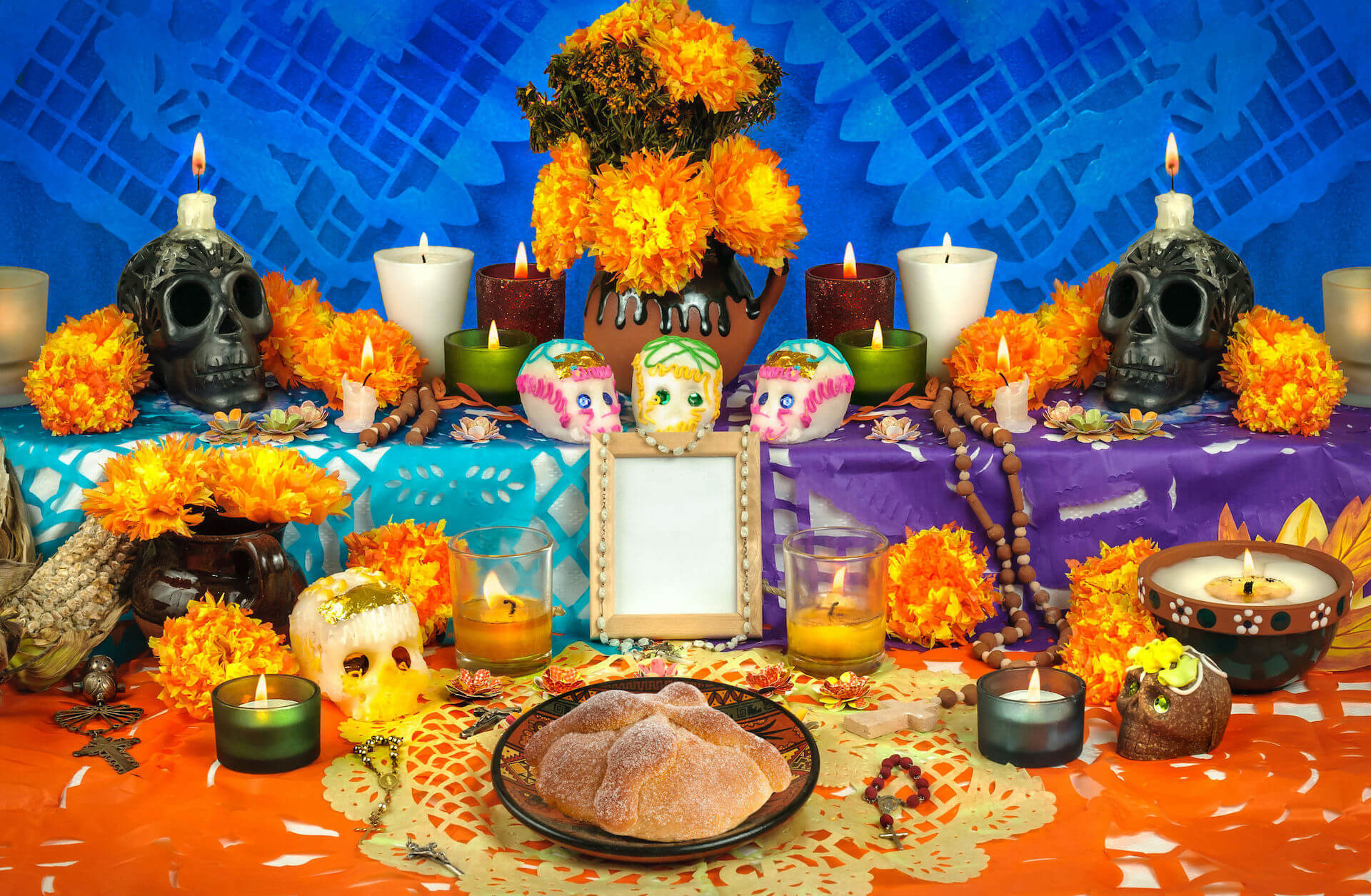
Día de los Muertos: 10 curiosities about the Feast of the Dead in Mexico
If you ever want to capture and feel the soul of Mexico, you must experience a Día de los Muertos celebration. Once you have lived it, you will probably understand why humor often arises to help Mexicans face their tragedies, and why they tend to live the present knowing that life is short.
These festivities take place on November 1st and 2nd in every corner of Mexico, although one of the most emblematic towns where you can enjoy this national holiday is Pátzcuaro, in the state of Michoacán.
For travelers exploring the Riviera Maya, Día de los Muertos is also a meaningful opportunity to discover a deeper side of Mexican culture during a stay in Tulum. After a day by the Caribbean Sea, local events, traditional food and regional celebrations can offer a memorable introduction to one of the country’s most important traditions.
What is Día de los Muertos?
Día de los Muertos is one of Mexico’s most meaningful and vivid celebrations: a national feast rooted in ancient pre-Hispanic cultures, including the Aztec, Maya, Purépecha and other Mesoamerican peoples, who practiced rituals to honor the dead and accompany them on their journey beyond earthly life.
With the arrival of the Spanish, these traditions gradually blended with Catholic celebrations dedicated to saints and departed souls. This is how the modern Día de los Muertos took shape, around November 1st and 2nd, becoming a unique expression of Mexico’s relationship with memory, family and death.
Far from being only a moment of mourning, Día de los Muertos is a celebration of remembrance, affection and symbolic reunion. According to popular belief, during these days the souls of deceased loved ones temporarily return to earth to visit their families. For this reason, homes and cemeteries are filled with carefully prepared ofrendas: photographs, personal objects, favorite food and drinks, candles, incense and bright orange cempasúchil flowers.
These offerings are full of meaning. Candles light the way, water refreshes the souls after their long journey, salt symbolizes purification, while cempasúchil petals help guide loved ones back home with their color and scent.
Colors, music and symbols
Día de los Muertos is visually intense and rich in symbolism. Bright shades of orange, pink and purple express joy and celebration, while decorated skulls, known as calaveras, remind us of death with sweetness, irony and tenderness.
Music, costumes, masks and public celebrations turn streets, squares and cemeteries into shared spaces of memory. In some places, the atmosphere is intimate and family-centered; in others, it becomes a collective event made of processions, night vigils, traditional food and popular art.
A tradition that changes from region to region
Día de los Muertos is not celebrated in the same way everywhere. Each region has its own traditions, rituals and visual language. Places such as Mixquic, Janitzio, Pátzcuaro and Oaxaca are especially known for their powerful celebrations, with candlelit cemeteries, processions, music and deeply rooted community practices.
In recent decades, Día de los Muertos has also become more visible internationally through cinema, tourism and the arts. Yet its deepest meaning remains emotional and social, as it helps families remember, tell stories, pass memories from one generation to another and accept death as a natural part of life.
What makes Día de los Muertos so moving is that it transforms absence into presence, grief into connection and memory into celebration.
A value recognized by UNESCO
In 2008, UNESCO recognized the great importance of Día de los Muertos and added it to its Representative List of the Intangible Cultural Heritage of Humanity. According to UNESCO, the festivity is especially significant in Mexico’s indigenous communities because it is – as we previously explained – linked to the temporary return of deceased relatives and loved ones to earth.
10 curiosities about Día de los Muertos in Mexico
1. Families build personal altars at home
In Mexico, many families build their own personal altar, where they place pictures of their deceased loved ones, a cross, candles, salt, sugar calaveritas and bright yellow marigolds called cempasúchil. Copal incense is also lit to purify the scene.
These altars are among the most recognizable symbols of Día de los Muertos, but they are also deeply personal. Each family chooses objects, food, drinks and details that belonged to the person they want to remember.
2. Altars often have three levels
The altars are traditionally built in three levels representing the underworld, life and life after death.
This structure helps give symbolic order to the offering, as it connects different dimensions of existence and turns the altar into a small sacred space, where memory becomes visible through color, fragrance and light.
3. Graves are decorated and visited
If the deceased were buried, their relatives will also decorate their graves and celebrate life among the dead. They bring their favorite food and drinks, play their favorite music and welcome the souls that have come to visit.
In many towns, cemeteries become places of gathering where families spend time together, share stories and keep company with those who have passed away.
4. Favorite food and drinks are offered
The deceased’s favorite food and drinks are prepared so they can sustain the long journey to earth and back.
Relatives may even place the cigarette brand their loved one smoked, tequila, pulque, mezcal, beer or whatever they liked to drink. If it was a child who died, families may place their favorite meal or toy at the altar.
This is one of the most touching aspects of the celebration: the offering is always made of small details that keep a person’s memory alive.
5. Candles and marigolds guide the way home
Candles are lit and marigold petals are laid on the ground in order to help deceased relatives find their way home.
The bright orange-yellow color of cempasúchil flowers is one of the visual signatures of Día de los Muertos, and their petals are often arranged in paths leading toward the altar, creating a symbolic route for the returning souls.
6. November 1st is dedicated to children
On November 1st, families remember the little ones, the babies and children who left as angels.
On November 2nd, adults are remembered and felt. Together, these two dates create a gentle rhythm of remembrance, giving each loved one a dedicated place in the celebration.
7. Schools create their own altars
All schools in Mexico, from kindergarten onwards, have their own altars. Students actively participate in creating and decorating them.
This helps children understand the tradition from an early age. They learn that Día de los Muertos is part of Mexican identity, family memory and cultural heritage.
8. Pan de muerto is eaten only during the season
Pan de muerto, or “bread of the dead”, is a typical sweet and fluffy bread decorated with bones and skulls made from dough and sprinkled with sugar.
October and November are the only months of the year when you can enjoy this delicacy. For many people in Mexico, its aroma and flavor immediately announce that Día de los Muertos is near.
9. Some altars remember those who have no one left
Some families place frames with no pictures on them on their altars and prepare extra food and drinks for those who died and have nobody left on earth to visit.
It is a small but powerful gesture, because it extends remembrance beyond the family circle and gives symbolic hospitality to forgotten souls.
10. Parades and festivals bring the tradition to life
If you are visiting Mexico during these dates, make sure you watch one of the many parades held in towns. Mexico City’s parade is one of the most colorful and spectacular to witness, with monumental Catrinas, music, floats and performances along some of the city’s most iconic avenues.
If you are visiting the Riviera Maya, don’t miss the Festival of Life and Death Traditions in Xcaret. The event usually takes place between late October and early November and brings together artistic presentations, regional traditions, typical food and cultural activities inspired by Día de los Muertos.
Not only is there a wide variety of events taking place: you can also taste this festivity’s typical food, visit the park’s graveyard, El Panteón, and better understand Mexico’s unique take on death.
Experiencing Día de los Muertos during your stay in Tulum
Día de los Muertos is one of the most meaningful times to be in Mexico. It allows visitors to see a culture where memory is expressed through beauty, food, music, flowers and family rituals.
From Tulum, guests can enjoy the quiet atmosphere of the Caribbean coast and, at the same time, discover nearby celebrations in the Riviera Maya. After experiencing the colors, aromas and emotions of Día de los Muertos, returning to your resort on the beach will definitely bring another kind of connection with Mexico: calm, nature and the simple pleasure of being present.
If you are planning to visit Tulum between late October and early November, Cabañas Tulum Beach Hotel & Spa offers a peaceful beachfront retreat where you can combine cultural discovery with days of rest by the Caribbean Sea.
Book your stay and experience one of Mexico’s most meaningful traditions from one of the most beautiful corners of the Riviera Maya.